Reaching remote communities in Northern Canada by air remains a logistical challenge that few travelers anticipate. Major commercial airlines focus their operations on high-traffic routes, leaving vast northern regions without direct service. This guide outlines the regional air travel options available, the criteria for choosing your flight, and key details to know before booking a flight to the North.
You’ll find information on the carriers serving these areas, government fare-subsidy programs, and the business and medical uses of regional aviation in the northern territories.
Key Points: Regional Flights in Northern Canada
- Isolated communities in Northern Canada rely on regional airlines for essential goods and healthcare.
- The Regional Air Access Program (PAAR) offers Quebec residents discounts ranging from 50% to 85% on tickets.
- Propair has been connecting remote regions of Quebec and Ontario to major hubs with daily flights since 1954.
- Private terminals (FBOs) reduce boarding time and offer a quiet environment without security checks.
- Choosing the right regional carrier requires evaluating destinations, flight frequency, and the types of aircraft available.
Why Regional Air Travel Is Vital for Northern Canada
For many northern communities, air travel is the only reliable year-round means of transportation. Land routes are often seasonal, passable only during the winter months as ice roads. The rest of the time, residents rely on air service to receive food, medication, and mail.
According to a 2025 study published by the Canadian Competition Bureau, air travel in these regions “is not optional—it is vital.” Residents depend on it for access to health care, groceries, employment, and social connections.
This reality explains why regional airlines play a pivotal role in the economy and daily life of the North. Without these connections, dozens of communities in Nunavut, the Northwest Territories, Nunavik, and northern Quebec would be cut off from the rest of the country.
Which regions of the Canadian North are served by air?
Canada’s regional air network covers a vast territory. Here are the main areas served by carriers specializing in northern routes.
Northern Quebec and Nunavik
This region includes communities accessible only by air, such as Kuujjuaq, Chisasibi, Radisson, and Schefferville. Flights typically depart from Montreal, Quebec City, or Val-d’Or. Propair serves several of these destinations with scheduled flights from Rouyn-Noranda to Montreal, Ottawa, Quebec City, and Toronto.
Abitibi-Témiscamingue and Northern Ontario
Abitibi-Témiscamingue, with its mining and forestry industries, generates a considerable volume of business travel. The cities of Rouyn-Noranda, Val-d’Or, and Sudbury are connected to major urban centers by scheduled flights. These routes meet the needs of professionals who must travel to remote work sites while minimizing their travel time.
The North Shore and the Lower St. Lawrence
Towns such as Blanc-Sablon, Natashquan, La Tabatière, and Havre-Saint-Pierre are served by regional airlines. These coastal communities rely on air travel to maintain their connection to Quebec’s urban centers, particularly during the months when maritime navigation is suspended.
How Do Regional Air Services Work in Canada?
Regional air services fall into several categories, each serving distinct needs. Understanding these categories will help you choose the option that best suits your situation.
Scheduled (Commercial) Flights
These flights follow a fixed schedule and connect destinations according to a published timetable. You purchase an individual ticket, just as you would with a traditional airline. For example, Propair offers daily commercial flights between Rouyn-Noranda, Montreal, Ottawa, and other cities.
Air Charter
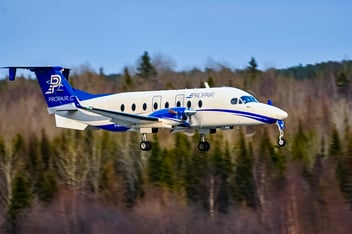
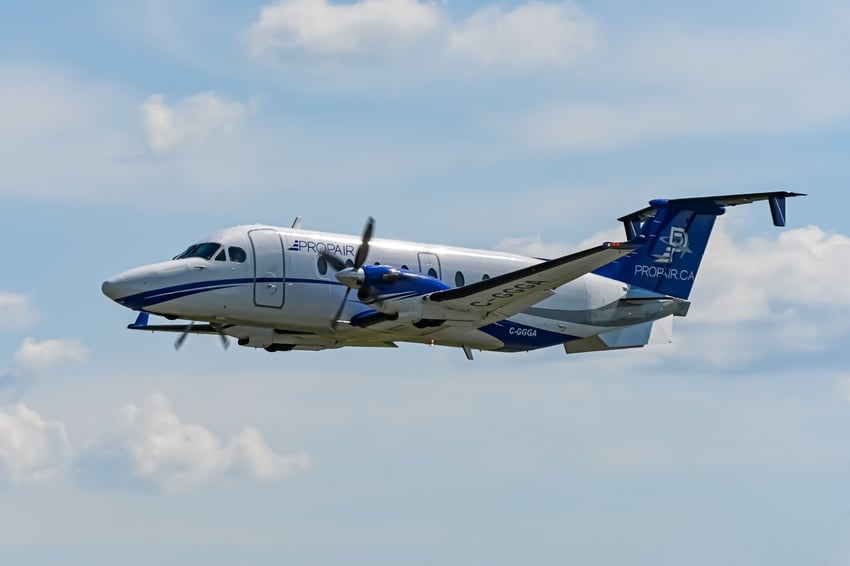
Air charter allows you to charter an entire aircraft according to your schedule and itinerary. This option is ideal for companies that need to transport teams to remote work sites or for organizations with specific logistical needs. Propair offers passenger and cargo charter services using King Air and Beechcraft 1900D aircraft capable of landing on short, gravel runways.
Shared Charter
Shared chartering allows multiple organizations to share the costs of a chartered flight by booking unoccupied seats. This approach reduces the cost per passenger while maintaining the flexibility of a private flight. This is a particularly attractive option for medium-sized companies that do not need an entire aircraft.
Air Medical Evacuations
In remote communities where access to hospital care is limited,aeromedical evacuations ensure the rapid transport of patients to medical centers. Propair converts its aircraft into air ambulances equipped with state-of-the-art medical equipment, with an onboard medical team capable of responding in less than 90 minutes.
The Regional Air Access Program (PAAR)
The Government of Quebec has implemented the PAAR to make regional flights more accessible to residents. This program, extended through March 31, 2027, offers substantial discounts on airfare for intraprovincial flights.
Who is eligible for the PAAR?
The PAAR is intended for individuals traveling for personal reasons, nonprofit organizations, and travel related to school, sports, or cultural activities. Employer-sponsored business travel is not eligible, except for nonprofit organizations.
What discount can you get?
Discounts range from 50% to 85%, depending on the destination. The most remote communities, such as Blanc-Sablon, Natashquan, or Schefferville, qualify for the maximum 85% discount. Cities such as Rouyn-Noranda, Val-d’Or, or Sept-Îles are eligible for a 50% discount. Propair is one of the airlines participating in the PAAR program.
How do I purchase a ticket at the PAAR fare?
Simply book directly with a participating airline. With Propair, you can use the promo code PAAR50 on the booking platform to apply the discount at the time of purchase, without having to request a refund afterward.
What factors should you consider when choosing a regional airline?
Choosing the right airline for your trips to the North requires considering several practical factors. Here are the criteria to consider.
Destinations and flight frequency
First, check whether the carrier offers regular service to your destination. A daily flight offers significantly more flexibility than a weekly flight, especially for business travel where time is of the essence. For example, Propair offers daily flights between Rouyn-Noranda and Montreal, Ottawa, Bathurst, and other destinations.
Aircraft Type and Capacity
Regional airlines use aircraft adapted to northern conditions: short runways, gravel surfaces, and variable weather conditions. Propair’s Beechcraft 1900D can carry up to 18 passengers at a cruising speed of 518 km/h, while the King Air 100 accommodates 9 passengers and has a range of 2,000 km.
The Boarding Experience
Some regional carriers use private terminals (FBOs) in major cities. These facilities offer a streamlined boarding process: no security screening, comfortable waiting areas, workspaces, and the option to check in as late as 30 minutes before departure. Propair uses FBOs in Montreal (Skyservice), Ottawa (Skyservice), Quebec City (Avjet), and Toronto (Stolport, Billy Bishop).
Fare Flexibility
Travel to the North is often subject to last-minute changes. Choose an airline that offers free change and cancellation options. Propair flight passes, for example, allow you to purchase a block of 25 tickets with cancellations, changes, and passenger substitutions included.
Specialized Services
If your needs include cargo transport, aeromedical evacuation, or charter flights for work crews, verify that the carrier has the appropriate aircraft configurations. The ability to land on unpaved runways is a key factor in reaching the most remote communities.
What are the main business uses of northern regional flights?
Regional air travel isn’t just for personal travel. Companies operating in Canada’s North use it daily to maintain their operations.
Transporting crews to mining and forestry sites
The mining, forestry, and energy sectors employ thousands of workers at sites far from urban centers. Air charter services allow these teams to be transported on a schedule tailored to work rotations, without relying on commercial flight schedules. This logistics approach reduces transit times and maximizes the number of productive days in the field.
Travel for Executives and Managers
For managers who need to visit multiple sites in a single day, regional flights offer the option of a same-day round trip. This eliminates lodging and meal expenses while reducing time away from the office. The use of private terminals (FBOs) speeds up the process, with boarding possible 30 minutes before departure.
Supply and Freight Transport
Air cargo transport ensures the delivery of parts, equipment, and supplies to construction sites and northern communities. Aircraft such as Propair’s Beechcraft 1900D can carry up to 5,500 pounds of cargo, with a cargo door sized to accommodate large shipments.
How to Plan a Trip to a Remote Northern Community?
Traveling to a northern community requires more careful planning than a flight between two major cities. Here are the steps to follow.
Step 1: Identify your itinerary and any necessary connections
Check the destinations served by regional carriers and see if any connections are needed. Some itineraries require a transfer at a regional hub such as Rouyn-Noranda, Val-d’Or, or Québec City. Connections between Propair flights take place in private terminals, which eliminates the need for long walks through the airport.
Step 2: Book in advance and check your eligibility for the PAAR
If you’re traveling for personal reasons within Quebec, check whether your trip is eligible for the PAAR. Booking in advance ensures you a seat on high-demand flights, especially during peak periods such as summer and the end-of-year holidays.
Step 3: Prepare your documents and luggage
Present a valid photo ID (driver’s license, passport, or NEXUS card). Check your airline’s baggage allowance rules, as they vary depending on the type of aircraft and the route you’re taking. On smaller aircraft, storage space is limited.
Step 4: Plan for unexpected weather
Weather conditions in Northern Canada can cause delays or cancellations. Keep your schedule flexible, especially in winter, and make sure your ticket allows for free changes if your schedule changes.
Government Investments in Northern Air Connectivity
The federal government recognizes the strategic importance of air connectivity for northern communities. Transport Canada has invested more than $1.2 billion in over 200 small regional and remote airports through the Airport Capital Assistance Program (ACAP), with an annual budget of $38 million.
In Quebec, the Regional Air Access Program (PAAR) has been extended through 2027. Similar programs exist in the Atlantic provinces, where the Atlantic Canada Opportunities Agency announced in 2025 an investment of up to $6 million over three years to support regional air service.
Current Challenges Facing Regional Air Travel in the North
Despite these investments, the sector faces several structural challenges that affect the quality and availability of services.
The Withdrawal of Major Carriers
Since the pandemic, Air Canada has withdrawn from several regional markets, including Baie-Comeau, Gaspé, Mont-Joli, and Val-d’Or. This withdrawal has left a void that regional carriers are trying to fill. It illustrates the fundamental challenge of air travel in sparsely populated regions: these routes are not always financially viable for major airlines.
Limited airport infrastructure
Many northern airports have short runways—often gravel—and minimal facilities. These constraints require specialized aircraft capable of operating under such conditions. PAIA investments aim to improve this infrastructure, but there is still a significant gap to bridge.
In summary: How to reach northern communities by air
Regional air travel is the vital link connecting isolated communities in Canada’s North to the rest of the country. For both business travelers and individuals, choosing the right carrier depends on destination coverage, flight frequency, fare flexibility, and the ability to operate in northern conditions.
Government programs such as the PAAR provide concrete financial support to make these trips more accessible. And regional carriers like Propair, which have been rooted in these regions for decades, understand the logistical realities of the North and address them with tailored solutions—from scheduled flights to cargo charters and aeromedical evacuations.
FAQ on Regional Flights in Northern Canada
What documents are required to take a regional flight in Canada?
You must present a valid government-issued photo ID, such as a driver’s license or passport. NEXUS cards are also accepted. Propair requires you to present this ID at check-in and boarding.
How early should I arrive before my flight?
Propair recommends arriving 60 minutes before departure. However, thanks to private terminals (FBOs), you can arrive 30 minutes before your flight and enjoy fast check-in, without security screening or long lines.
What is the Regional Air Access Program (PAAR)?
The PAAR is a Quebec government program that offers discounts ranging from 50% to 85% on airfare for intraprovincial regional routes. Propair participates in this program, and you can apply the discount directly at the time of booking by using the promo code PAAR50.
Are regional flights in the north safe?
Canadian regional carriers are subject to the same Transport Canada safety standards as major airlines. Propair invests in ongoing crew training and rigorous fleet maintenance to ensure the safety of every flight.
Can cargo be transported on a regional flight?
Some regional carriers offer air cargo services in addition to passenger service. Propair uses aircraft such as the Beechcraft 1900D, which can carry up to 5,500 pounds of cargo, and the King Air 100, with a capacity of 2,000 pounds. You can request a quote for a cargo charter directly online.
Which communities in the Canadian North are accessible only by plane?
Many communities in Nunavut, Nunavik, the Northwest Territories, and the Lower North Shore are accessible only by plane. This is the case for communities such as Kuujjuaq, Resolute Bay, Arctic Bay, Blanc-Sablon, and La Tabatière, where there are no year-round accessible roads.